r/theydidthemath • u/Location_Next • 13h ago
[REQUEST] How much more would it increase the cost to make ships out of stainless steel
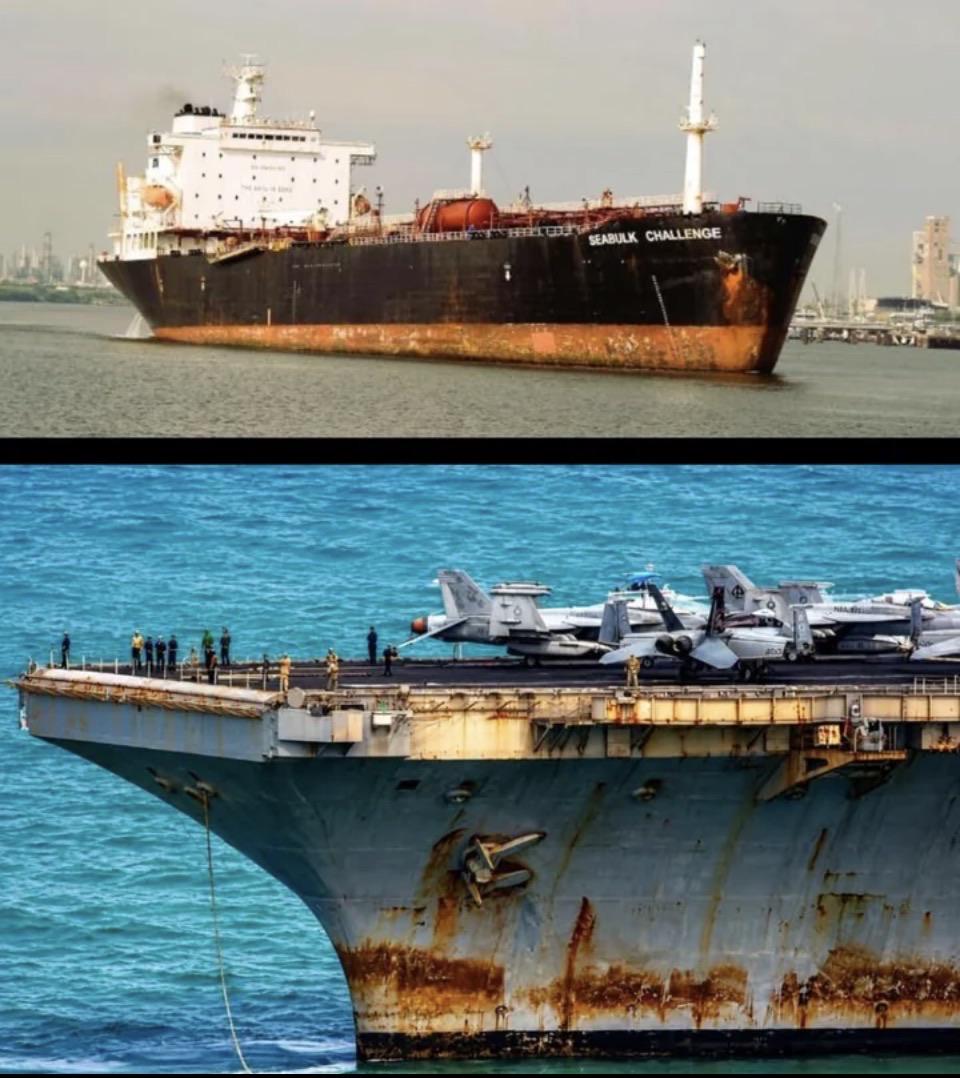
2.8k
u/OddTheRed 13h ago
4x cost just for materials. Then you have different welding processes which are more expensive as well. I think 4-5 times the cost would be a good estimate.
843
u/Ok_Orchid_4370 13h ago
And different new designs and construction methods of course.
1.6k
u/Laid_back_engineer 13h ago
And fun fact, stainless steel does rust. It just doesn't rust nearly as much. But on a ship, in the salty ocean, in warm climates. That's going to visibly rust.
1.2k
u/mistacheesegtr 13h ago
My shop teacher always said “stainLESS, not stain FREE”. Lol.
→ More replies (22)292
u/RailgunDE112 12h ago
In German it is rustfree (rostfreier Edelstahl)
635
u/mistacheesegtr 12h ago
Ya but how do we trust any language that calls gloves ‘hand shoes’ lmao. (Handschuhe, fyi)
202
u/OnoOurTableItsBr0ken 11h ago
My wife speaks English as her second language and calls toes “foot fingers”
→ More replies (21)90
u/camel_case_user 9h ago
She speak Spanish? In Spanish they are "dedos de los pies" or fingers of the feet
85
u/yes_its_my_alt 8h ago
In my made-up version of French they are called "foot potatoes", or "apples of the earth of the feet"
→ More replies (11)22
u/WhatAGoodDoggy 6h ago
Found Richard Herring's Reddit account
("Potatoes of the ground of the sky")
→ More replies (0)6
u/wibble089 5h ago edited 2h ago
It's the same in Czech too; my wife who otherwise speaks perfect English sometimes says foot fingers.
I wonder if this is similar in other Slavic languages too?
→ More replies (11)4
→ More replies (15)10
78
u/RailgunDE112 12h ago
I mean, it is a practical name for it.
→ More replies (6)104
u/Spoka_3000 11h ago
Hand socks would’ve been more acurate imo
→ More replies (8)114
4
→ More replies (31)3
13
u/statelypenguin 11h ago
okay then how much would it cost to build ships out of german rustfree steel?
→ More replies (2)5
u/RailgunDE112 11h ago
Not enough for Germany to build ships in the first place. Just the most profitable and most expensive parts.
Also it was a note on the dofferent wording for the same thing in different languages
3
6
u/real_W74 12h ago
I mean when u buy it it is stainfree and becomes then stainless
→ More replies (1)→ More replies (42)4
u/Pretend_Effect1986 12h ago
In Dutch it’s roestvaststaal or rust steady steel. It does rust by the corrosion creates a protective layer just like bronze.
→ More replies (2)8
u/rrsullivan3rd 9h ago
I think you’re thinking Corten steel, which is what shipping containers are made of, it gets a patina on it and then stops rusting.
→ More replies (1)60
u/KickPuncher21 12h ago
Yup. Salt hinder/kills the reaction that regenerates the layer of chrome that prevents rust.
It's stiffer too and less flexible in general versus steel, I'd be curious to know if it's actually a downside considering the forces at play with such big vessels sailing on open waters.
52
u/Laid_back_engineer 12h ago
Oh goodness yes. It also takes far less force to break, and will "fatigue" (though engineers hate that word in this context) much quicker.
31
u/admiraljkb 10h ago edited 10h ago
Oh goodness yes. It also takes far less force to break, and will "fatigue" (though engineers hate that word in this context) much quicker.
For USN purposes: an ungraceful degradation of capability.
(Ala the front is probably going to fall off)
12
u/SWLondonLife 9h ago
Is it supposed to do that (fall off)?
16
u/admiraljkb 9h ago
It's not typical no.
→ More replies (1)4
→ More replies (2)3
u/maxfields2000 8h ago
Unplanned dis-assembly? Adverse Cohesion? Unanticipated and Rapid Repurposing?
→ More replies (3)→ More replies (3)6
u/Able_Ad2004 10h ago
Why do engineers hate that word in this context?
27
u/Laid_back_engineer 9h ago
Because back in ye olden times, when engineers did a lot of dancing around machines chatting hymns and a lot less measuring with calipers, they noticed metals could withstand a force once, but not 10,000 times. So they can up with the term "fatigue" to describe this phenomenon, with the theory that the metal got tired and gave up.
Now we know what actually happens is microscopic stress fractures occur, and each loading cycle grows them a very small amount until the metal is weakened enough to finally fail completely; but we still use the word fatigue for this. It is a reminder of when we were wrong, and engineers don't like being wrong (we're silly that way).
That and the Aether; we were super wrong with that one too. But that's an interesting story, for another time.
13
u/Able_Ad2004 9h ago
Thanks for the response! Super interesting.
As a layman, I would argue it’s still the correct word? I mean, when I think of fatigue in the human sense, I think of a million little cuts that drains one’s energy. Waking up an extra time during the night, having to wait in line an extra few minutes, kids not eating dinner or fussing before bed, a coworker not doing their job, until it all gets to be too much and somebody snaps under fatigue. Why do engineers not think it’s the right word?
20
u/Difficult_Staff_5189 8h ago
I am a mechanical engineer who designed high fatigue stress parts for refrigeration compressors. Fatigue is 100% the correct word to use in this situation. You design for a fatigue life of a component and do not want it to fail before the systems design life. I worked with about 70 other compressor engineers for 5 years and had not once heard someone have an issue with the word fatigue. Even our materials teams would look for fatigue stress fractures when analyzing failures to try to determine if the failure was fatigue or overloading.
→ More replies (7)10
u/Laid_back_engineer 9h ago
I think because it just reminds us of a time that we used to think metal got literally tired. But I agree with you, it is still appropriate, and I also think that we are not giving the past enough credit.
I feel that past engineers didn't actually think the metal was sleepy, but just noticed a phenomenon, couldn't fully explain it, gave it a name (because that's what you do, you have to name things) and moved on. Kind of similar to what modern scientists did with dark matter and dark energy (two things i think we'll look back on 100 years from now with similar embarrassment).
→ More replies (1)3
→ More replies (6)3
u/Remarkable_Gain6430 9h ago
Call me a lunatic or a square from the past but - let’s build the warships out of glass. In certain lighting conditions they’d be effectively invisible.
OK, I’ll let myself out.
→ More replies (1)4
→ More replies (7)16
u/NF-104 10h ago
You can’t make that blanket statement. Stainless like carbon steel comes in dozens of alloys with different properties. Austenitic stainless (like 304) is soft but quickly work hardens, While a precipitation hardening grade has great strength, and martensitic stainless is hard (like cutlery) but brittle. If it were me, I’d use 17-4 PH stainless at about a 15x cost differential.
→ More replies (1)6
u/big_trike 9h ago
At that point why not go with a nickel superalloy
→ More replies (2)4
u/Wibbles20 6h ago
Cost.
From a quick google, a mild steel like 4140 starts off at like $1.50 a kg. Stainless like 316 is like $5 a kg and a duplex stainless like 2205 is like $7 a kg. This is compared to hastelloy which starts at $32.50 a kg
→ More replies (2)11
u/OddTheRed 12h ago
They have marine grade stainless which holds up better than you'd think.
→ More replies (6)3
u/Key_Addendum_8064 10h ago
H1/lc200n. H1 is old and lc200n is space shuttle shit
→ More replies (1)12
u/RichEntertainer3024 13h ago
You can passivate it!
→ More replies (2)13
u/volatile_ant 12h ago
Passivation is what sets stainless steel apart in the first place, the metal reacts with oxygen to create a protective layer.
Salt basically prevents that reaction from happening.
6
u/AdInfinite2404 10h ago
There are different grades of stainless, 254 SMO is a high end stainless with 6% molybdenum For continuous, severe saltwater immersion or high-concentration salt solutions (it costs 4x what 316 costs). Or Duplex 2205 or Super Duplex 2507.
→ More replies (1)4
u/HK_Shooter_1301 10h ago
You could make it out of Inconel 718 or Haynes X and it would never rust , but be 40X more expensive
→ More replies (2)→ More replies (72)3
u/astro143 11h ago
I work in wastewater, if we have equipment in costal areas we have to extra warn the customer about it because there's just nothing you can do, it's only a matter of time, especially if storm surge throws brackish water in the sewer.
→ More replies (5)18
104
u/4e6f626f6479 12h ago
Stainless is also quite a bit weaker depending on application.
So you can add another 20-50% for increased Material needs
50
u/bqbdpd 10h ago
Or hear me out: We could cover the metal in some kind of plastic (vinyl, polyurethane, epoxy). It could be liquified and easily applied to existing ships.
11
26
u/regaphysics 9h ago
What do you think paints are made of?
28
u/bqbdpd 9h ago
red, green, and blue atoms? /s
→ More replies (1)6
u/sharklaserguru 4h ago
That's why you sometimes see colors expressed as three numbers; like dark green (50, 101, 62) is made out of tin, samarium, and mendelevium!
→ More replies (1)16
u/sloasdaylight 7h ago
Listen man we're just coming up with ideas here, we're not paintologists. Why don't you fill us in since you're such a paintophile?!!?!??1
15
u/SPQE_ 5h ago
Wooosh
→ More replies (4)2
u/Hour-Map-4156 5h ago
No, is not made of wooosh. It's made of some kind of plastic (vinyl, polyurethane, epoxy).
→ More replies (2)5
→ More replies (35)3
→ More replies (6)11
33
u/burnzwhnip 12h ago
As a tig welder I welcome this expansion in our military
9
u/InternetSandman 11h ago
My first thought was imagining how much longer it would take to Tig weld an entire ship
Second thought was controlling the distortion
Both thoughts made my brain hurt
17
u/Rough-Riderr 10h ago
As a former shipyard worker, I just got a little hard thinking about the job security in that proposal.
→ More replies (2)4
u/OddTheRed 12h ago
Nobody is going to be tog welding a ship, lol. They'd get AC stick.
→ More replies (2)6
u/x5u8z3r0x 11h ago
Stainless dual-shield FCAW with tri-mix most likely.
3
→ More replies (1)3
u/sloasdaylight 7h ago
Yep, 100% that or self shielded flux. Anyone tig welding a ship together is doing it because they either A) hate their welders, or B) because they want a ship that should cost $100 million to cost $300m.
→ More replies (1)27
u/Call-to-john 12h ago
Carbon fibre aircraft carriers it is then!
→ More replies (17)2
u/jks513 8h ago
The moment it gets hit it’ll shatter which is bad for a warship.
6
u/Kermit_the_hog 6h ago
Good ol’ steel is really wonderfully easy to fix compared to just about any other material.
→ More replies (2)→ More replies (123)6
u/Major-Bus7493 12h ago
I'd be willing to bet 6-8 times the cost. You'd have to re-engineer the design. The passivating alone would be crazy after welding
1.4k
u/xWorrix 13h ago edited 13h ago
Stainless steel is not completely resistant to corrosion, so it’s not a perfect fix. Also SS is a huge pain to weld, cut etc. just spitballing for regular projects I do at work SS parts are about 3x as expensive and I imagine if you have to make something so large it will be even more
- source: am mechanical engineer
Edit: when we design stuff like floating foundations for wind turbines we take into account the corrosion and design the foundation so that it after it’s ~20+ year span still will have sufficient strength. Of course there is also anodes, but some still rust away
1.4k
u/No-Ability6321 13h ago
It’s called stainless not stainnever
87
u/texan_robot 13h ago
So what you're saying is that we should make the hull out of cast obsidian?
38
u/Pwydde 12h ago
What about, now just listen for a minute, building the hull out of solid oak! With plenty of tar and copper protection! Hat shit will NEVER RUST!
→ More replies (3)20
u/Nachocheeze60 12h ago
How about this.!!
Let’s make a shit out of ICE and sawdust?
I’ll shoot it with a bullet to make sure you see it’s strong enough.→ More replies (1)7
u/stoppableDissolution 11h ago
It did kinda work tho
12
28
u/hudsonreaders 12h ago
Bronze
35
u/AHumbleSaltFarmer 12h ago
Copper bottoms, strong oak and wind powered propulsion so we can have a sustainable, green military
26
10
7
u/atomicsnarl 12h ago
I'm sure someone will figure out how to launch and recover aircraft around all the masts and sails.
10
7
u/No_Place5472 11h ago
Sails/Masts on left and right of the runway. You takeoff/land in the tunnel. Easy Peasy.
3
→ More replies (2)6
→ More replies (4)3
→ More replies (3)23
5
→ More replies (34)3
u/Which-Environment333 12h ago
For the sake of conversation, what are your thoughts on a carbon fiber alternative. Before your answer, lettuce assume the forms are already in place for all the various structures/panels. And I would also assume a concentrated weight at the bottom of the vessel as it will indubitably be extremely light and prone to tipping especially when carrying a weight heavier than itself above its center of gravity 🤔.
→ More replies (4)10
u/texan_robot 12h ago
Carbon fiber composites are not great at resisting compressive loads. Ships are heavy. The water is heavy. Carbon fiber is perfect for the hull of an aircraft, those are pressurized from the inside. It'd be terrible for the hull of a ship that has to resist pressure from the outside.
→ More replies (13)149
u/Odd-Homework-3582 13h ago
Delightful
→ More replies (1)24
u/thrance 12h ago
That’s marvelous.
→ More replies (4)34
u/mzincali 12h ago
Marveless
→ More replies (2)37
19
u/Tecbullll 13h ago
I used to work in Odessa TX. The ground water itself sometimes runs 10.5-11ph and is corrosive. At my work, I made a hand washing station outside using stainless steel tubing. After a couple of years, the end started to corrode away.
9
u/Bergwookie 11h ago
Stainless hates chlorine and hydrogen.
And seriously, what's wrong with your groundwater? That's lye at that point
→ More replies (2)5
u/Tecbullll 11h ago
So much crap from injection wells. Water so hard spent two days with beans in a crock pot before I gave up and bought bottled.
→ More replies (37)5
62
u/Laid_back_engineer 13h ago
Adding to that, as a mechanical engineer as well, stainless steel is way not as strong as many (if not most) steel alloys.
Now I'm not a ship builder/designer, and don't work with military tech, but strength does seem like it'd be a factor in those applications.
36
u/luffy8519 12h ago
Not entirely true, austenitic stainless steels like the 300 series are significantly weaker than low alloy steels, but martensitic stainless steels like the 400 series or 17-4PH are in the same ballpark for strength as many low alloy steels.
35
u/Laid_back_engineer 12h ago
Well sure, you're pitting the very best of the stainless steels against mid to low strength alloy steels. But if you get to some of the more specialized steel alloys, they destroy any stainless in strength.
Yes there are some stainless steels that are stronger than some alloy steels. But 99 times out of 100, you grab a random stainless vs a random steel, and the steel is coming out ahead.
→ More replies (4)→ More replies (5)8
u/Kombatwombat02 12h ago
Martensitic stainless would have the tradeoff in brittleness wouldn’t it? i.e. to achieve a similar strength as a low alloy steel the stainless wouldn’t also be able to compete on toughness. I’m not in marine, but I would guess that brittle fracture is a concern for something that has to traverse some cold waters
→ More replies (1)11
u/luffy8519 12h ago
Brittle fracture and in particular ductile to brittle transition behaviour is incredibly important in ship design, yes. Many liberty ships were lost before ductile to brittle transition behaviour was understood as a phenomenon.
So you're right, austenitic steels are probably preferable for shipbuilding, but having done some reading shipbuilding steels are in the same ballpark for strength and toughness as the 300 series austenitic stainless steels, so the main barriers to their use would be cost and weldability.
→ More replies (3)→ More replies (5)6
u/edman007 12h ago
Yea, I was going to say, when building a warship, you care about things like torpedo resistance. You pick the steel because it's strong, you can paint the hull to keep rust at bay. But further, the steel on the hull is WAY thicker than needed to be seaworthy. I don't think a little rust is getting through the hull, or even weakening it enough to be an issue.
6
u/schilleger0420 11h ago
You'd be surprised. We haven't slapped armor on our warships for awhile. Even in WW2 the only ones that really had appreciable armor and thick hulls were battleships and we haven't built one of those in decades. We design ships for fire suppression and damage mitigation sure but most of the protection comes in the form of just speed and anti-air/missile/torpedo defenses. Generally speaking ya don't have to worry about having a thick and armored hull if you're good at just not getting hit.
→ More replies (1)11
u/SoylentRox 1✓ 13h ago
I heard that titanium IS about that resistant to corrosion. That if either we really wanted a rust proof ship or we found a way to make cheaper titanium we could do it.
20
u/DaSecretSlovene 12h ago
But lacks some other properties when compared to steel so marine titanium alloys aren’t that cheap (especially as they need high m% of vanadium)
→ More replies (2)7
u/Nimrod_Butts 12h ago
I suspect theres not enough supply for an aircraft carrier's worth anyway
→ More replies (8)12
u/LLAMEROOOO 12h ago
Ti in plate/or sheet form can cost more than $8000 per ton. It is helpful that commercially pure titanium would would better for this application as far as corrosion resistance goes, which cuts out the price of allowing elements like vanadium.
However, the price of Ti is currently tied up in the high temps and long reduction times of the kroll process--including magnesium costs. Even novel methods of titaniumn product are anchored by megnesium costs, which are particularly high in the US.
I absolutely believe titanium will never be a widespread replacement for stainless steels until it can be made completely electrolytically.
→ More replies (11)→ More replies (7)13
u/Hdfgncd 12h ago
1st titanium is 10x-20x the cost in materials alone
2nd the cost of making things with titanium is absurd. The reason it’s so corrosion resistant is because it’s absurdly reactive and makes a protective layer of TiO almost instantly in air. It’s a huge PITA to weld titanium in indoor factory settings, much less a shipyard. It doesn’t like to be cut, it doesn’t like to be machined, it’s just annoying
3rd the US produces about 100,000T (~22,200m^3) of titanium a year total. According to some blog an aircraft carrier has 50,000-70,000T of steel, I’ll take the lower number because I assume there’s stuff you just can’t replace. That’s ~6,370m^3 of steel per ship. Assuming you can 1:1 replace the volume of steel you’d use up just under 1/3 of the entire US’s yearly titanium production for one ship.
→ More replies (3)8
u/freedcreativity 12h ago
Yep, the Soviets worked on very large-scale Ti fabrication for Alfa-class subs and K-222. Their solution was huge inert gas tanks and sending the welders in with breathing apparatuses.
→ More replies (1)4
u/Paul_The_Builder 12h ago
Funny story - I replaced my kitchen sink and sold the old one (about 50 years old) pretty bog standard stainless steel sink on Facebook marketplace for cheap.
A guy came to pick it up and I said "its in pretty good shape for its age, no rust spots on it". And he said "it can't rust, its stainless steel".
Ok buddy enjoy your sink :-)
3
u/But_IAmARobot 12h ago
Would aluminum be a viable option? I understand it isn’t as strong as steel, so you could have coated steed armor plating on the inside with an external water-facing aluminum shell
→ More replies (8)6
u/vx15i 12h ago
The US Navy used to use alumnium in ships as part of the superstructure, but there were lots of issues, including that it suffers heavy damage in fires.
→ More replies (2)→ More replies (78)3
u/Sillynanny8 12h ago
Stainless steel is uniquely susceptible to chloride corrosion as well so likely not even the best material for the job. Thing under stress will crack instead slowly rusting away
→ More replies (2)
125
u/Pixel_Blinky_Blinky 13h ago
Worked at Morton Salt as an engineer for decades... There are good "stainless" metals that would not rust in seawater for many decades, but they get really expensive. Or you go cheaper to a 316L but have issues with the design due to differences in the metal, cracking and brittle effects, etc and it still degrades very, very slowly. Anything less resistant to seawater than that- steel and good paint will outperform. That said, I had various forms of stainless in process (we were at much higher salt concentrations than the ocean) for many decades without appreciable degradation, so it is an option. AL6XN, Monel, Inconel... now that would build a nice ship. Just slightly expensive....
43
u/olleyjp 11h ago
Inconel is what we use in the North Sea for the gaskets on Christmas trees for sub assemblies for oil pipeline
We used to have a deal for scrapping it as the rings were single use. Even scrap value was insane.
→ More replies (3)17
u/CBus660R 10h ago
I worked in the non-ferrous division of a scrapyard for a few years. Specialty grades of SS definitely are worth some money, 10x or 20x of iron. If the scrap is worth that much more, just think of what yhe finished products cost.
→ More replies (2)→ More replies (7)3
157
u/Fatefinder 13h ago
Someone needs to correct me because I don't know enough but I think even the best stainless will corrode in the oceon. Just slower than regular steel. The extra costs don't outweigh that slower corrosion rate.
96
u/StumbleNOLA 12h ago
Not even slower. Stainless that passes thru the water-air boundary is subject to extremely fast inter-granular corrosion. In practice the ship would rust away at the waterline extremely quickly, potentially in a few months.
22
u/throwra64512 11h ago
This is also just the very outer skin layer on this boat. It’s designed to get jacked up.
→ More replies (8)→ More replies (2)10
u/jamiethekiller 10h ago
Exactly this. The submerged portion of the hill wouldn't corrode. Where the salt would dry up would instantly corrode this and be Swiss cheese inside a year.
Duplex stainless steel can resist salt corrosion well in some cases. Carpenter 20/alloy 20 is better.
Galvanized steel works well as long as the galvanized area doesn't wear off. Then it's a seive for corrosion.
9
u/lowrads 11h ago
Navies have experimented with making ships out of aluminum. Ultimately, making ships last longer, or finding an aluminum alloy not susceptible to fire or cracking isn't all that economical. Even with conventional steel, a warship becomes obsolete long before it ever gets sent to the breaking yard.
If element number 13 is selected, it's really because it doesn't interfere with radio systems, or because it doesn't trigger magnetic mines. One of those is also true of stainless steel.
→ More replies (1)→ More replies (4)13
u/justinmel 11h ago
Inconel then
→ More replies (1)9
u/that_one_duderino 10h ago
Inconel would work. It would just be 10x the price of a stainless steel ship, and that’s lowballing
→ More replies (4)
75
u/A_Dicksmasher 12h ago
Engineer who used to design ships for the US Navy here. Everyone elses explanations are spot on, but I have yet to see a comment that touches on one critical point- armor.
Those 4-5x estimates from everyone are just price and materials. But to make them just as "torpedo resistant" you're probably talking 10x-15x just because thicknesses would increase. I doubt there's enough big boy stainless production in the world capable of keeping up with that demand, for a fleet.
9
u/ApolloWasMurdered 10h ago
Thank you!
Looking at all the responses, and people are simply comparing the cost of regular 250MPa mild steel with 250MPa stainless steel.
Assuming boats are anything like land vehicles, they’re going to actually be made from steels with a yield strength of 800-1500MPa. To get the same strength, you would need the steel to be much thicker. The weight difference alone would probably make it impossible to build a stainless ship to the same strength as a conventional ship, as it simply wouldn’t displace enough water to overcome its increased weight.
→ More replies (7)→ More replies (23)5
u/DocumentOk7579 11h ago
How torpedo resistant are ships? How many 533mm hits can a carrier take? Can a destroyer even take one 533mm?
29
u/A_Dicksmasher 11h ago
I know for a fact that a carrier can withstand anywhere from zero to thirty-thousand direct hits from 533mm torpedos.
And yes, it is possible for zero torpedos to sink a carrier.
→ More replies (1)3
u/rocketIIIman 9h ago
Considering that hull plating on destroyers is only 3/8ths thick, id say about 0 lol
→ More replies (7)3
u/TacTurtle 5h ago
A bunch of modern torpedos have given up on the "blow big hole in side of hull" method of sinking as interior compartmentalization and segmented torpedo bulges (think sacrificial crumple zone) means impractically many hits are needed to cause enough flooding to sink.
Instead they work by creating a massive gas bubble underneath to lift up then drop ship to break the keel. The collapsing gas bubble then creates a vacuum which then pulls down and in on the ends of the now-bent hull section causing further damage.
59
u/Fishstockboy 13h ago
I have a reef tank and all my tools are stainless steel. I left one in a puddle of saltwater, the next day there was the first rust patch.
I know this isn’t a math awnser but whatever the cost is, it’s not worth it.
14
u/throwra64512 12h ago
Not only that but a reef tank gives you a very real view of salt creep at a micro level. “None of this ever touches the water, why is it covered in salt?” I live by the sea, spend as much time as I can, but the force of the ocean and weather aren’t the only reasons she’s a fickle one. The sea comes at you from all angles.
→ More replies (1)
19
u/ropeynick 12h ago
Corrosion resistance is great but stainless steels are much more prone to hydrogen cracking, especially when submerged in water. Instead of very predictable, measurable oxidisation corrosion you need to consider the possibility of your welds suddenly and unpredictably just falling apart.
Most shipbuilders are fine with a bit of unsightly rust that you can blast and paint rather than a ship just falling apart in mid-ocean.
Source: I am an inspection engineer in the maritime/oil and gas field.
→ More replies (4)
67
u/hungy_boi321 13h ago
StainLESS not stainNEVER, it would still rust, especially in saltwater conditions. It would be a massive waste of resources for very little gain
5
u/Sturmgeher 12h ago edited 2h ago
the V2A4 variant is very resistant and also used in very salty envoronments, like metal pools and chemical stuff.
V2A2 will also corode in seawater.
But the stainless is more tough, but less hard. It deforms different and i am not sure if it can take the bending as good as the special ship builing steel
I meand, brass is good against seawater, back in the days they made nautical instruments from brass. So, why not use A4 and coat everything in 5cm of brass?
edit:So, the brass thing is a joke, you see? 🫣
→ More replies (2)→ More replies (4)26
u/Zromaus 13h ago edited 13h ago
Tireless, without tiring. Sleepless, without sleep. Endless, without end. Restless, without rest.
The LESS in English typically is supposed to be the lack of.
You're correct about what would happen, but the word is not a good descriptor.
11
→ More replies (5)4
u/batman8390 12h ago
Except nobody is truly tireless, sleepless, or restless unless they die. They will get tired, rest, and fall asleep eventually. And they will die, because absolutely nothing is endless.
→ More replies (5)
9
u/Evening_Scale_5755 8h ago
If its in the ocean its oxidizing. There are low carbon steels that add nickel and chromium to make other oxides show up faster to prevent iron oxide but you cant be in that much salt water with metal and prevent oxidation. Its better to select a material for its structure and manufacturing and just keep it painted.
8
u/thpook 7h ago
The more cost effective method is a sacrificial anode cathodic hull protection system where the interaction of the steel and the anode and the salt water causes a difference in potential between the steel and the anode. The anode oxidizes, not the steel, and you just replace the anode every couple of years.
→ More replies (2)
7
u/Excellent-Word-5148 13h ago
Stainless is generally heavier than carbon steel. The environment to Weld or repair it must be very clean and no wind or the Weld can get contaminated and fail. We typically aim for 100" per man per day. On SS that output drops to 35" per day. If I had to put a factor for a ship, I'd guess the cost would be a 400-440% cost increase.
4
u/RichEntertainer3024 12h ago
I don’t think this is true at all. There’s a lot of variation with some of the fancier cres being “up to 2% more dense than carbon steel”
The welding part sounds legit
7
u/Early-Chemistry-8769 12h ago
Ok. Interesting thread. What about Ronseal Direct to Metal ™️ exterior paint. Lasts 15 years which is (I checked) a lot longer than 286 days.
It also comes in Elderflower, Mountain Mist, or you can go traditional with Garden Green.
7
u/emptybagofdicks 12h ago
If you wanted a material that actually doesn't rust you would make the ship out of titanium and it would cost up to 50x that of a steel ship. So you are probably better off just building 50 steel ships.
→ More replies (4)
15
u/Equal-Painter6529 12h ago
There have been about 10k posts of people who own wank panzers and the stainless steel turns rusty from getting it wet and drying in the sun.
That’s rain water. Ocean water would be far worse.
→ More replies (1)4
u/Sonzainonazo42 12h ago
TIL what a Wank Panzer is, also sometimes called a Wank Tank. They can refer to any oversized truck but this stainless reference is clear for the Cyber truck.
This is hilarious, thank you.
→ More replies (1)
4
u/DullMind2023 12h ago
Among the other excellent answers here, stainless is difficult to make compound curve (eg: curved in two directions at once) panels. Good case in point is the Cybertruck; its panels only fold in one direction. As the photos in the question show, bows have complex shapes.
5
u/PesadillaTotal 11h ago
It depends. A single ship likely six to eight times more. For all the ships out there we don't make enought steel in the world and i doubt that we coud even if we tried.
But stainless steel is a terrible choice for ships anyway as salt water is one of the main thins that can corrode it.
4
u/Deathking419 4h ago
Alot lmao. But remember as well its just surface level rust. It doesnt effect anything. Ships coming back to port like that is totally normal. After docking they examine the ship and everything checking for holes and making sure it's all good. Then they fix it and repaint it and everything. So its all fine. Just typical media blowing things out of proportion as usual for no reason
4
u/PckMan 12h ago
Stainless steel is rust resistant. It will rust, just slower than non stainless steel. As such there is no point trying to make ships out of it as preventative maintenance and corrosion protection will still need to be applied.
→ More replies (2)
3
u/SadIngenuity1937 11h ago
I weld on stainless haz mat tankers and while it requires more knowledge and skill than what is needed for welding mild steel I doubt it’s a factor in ship design. Stainless is expensive, heavy and does not flex like mild steel. I would think this has more to do with it than process of construction.
4
u/AlternativeBid2291 8h ago
Here's the problem, most forms of stainless steel will rust if they are in contact with mild steel. Not only the hull but all of the structure inside the ship would have to be stainless too.
5
u/cash8888 8h ago
So for the layman out there, is this just because of how long the deployment was, a lack of materials, a lack of leadership a combination of both? Or maybe because it can’t be maintained while possibly being under fire? I’ve just never seen one of our ships look like this unless it was being decommissioned.
5
u/APugDogsLife 8h ago
Any ship is going to get wear and tear out at sea. Especially for a warship on a combat deployment. As soon as that boat's back at dry dock, it's going to be cleaned up, repaired, repainted, ect.
→ More replies (2)→ More replies (2)4
u/Keepupwimmi 8h ago
It’s not a priority when you’re in the middle of the ocean. We always painted the boat in dock. It’s just safer that way.
3
u/angrytroll918 7h ago
The biggest issue is most grades of stainless aren't actually that salt resistant, especially after being welded. Stainless is also somewhat inferior in a lot of structural properties. It tends towards brittle failure
4
u/Witty_Ad_898 4h ago
Stainless steel is not perfectly resistant to salt water and all the contaminants it will encounter are harbor.
Stainless steel will not prevent the accumulation of deposits, which can oxidize and look like rusting iron (see the Cyber Truck).
Stainless steel has different properties. There are countless variations of steel, and a great many ways to make steel that resists corrosion. Stainless (at least 13% chromium in the mix iirc) is just one method, nitrogen steel is another and increasingly more popular form of stainless for knives and tools. Some of these steels are more brittle, some are more vulnerable to mechanical wear, some heat up or fatigue differently. Many steels are only weakly magnetic while others have the classic ferromagnetic properties.
So… yeah. It’s not as simple as making a ship, or any thing, out of stainless steel.
3
u/MuchoCoco 12h ago
Stainless would be terrible for a ship. Most of the corrosion occurs below the surface, making inspection and maintenance a real pain. Also, it's very difficult and costly to weld. Regular steel with regular maintenance is just fine for something that is really only meant to last for 20 years anyway.
3
u/lazy_capybara 11h ago
Stainless Steel is only "stainless" on normal use, i.e. normal household commercial use (depending on grading), and not Stainless on EVERY occasion, i.e. pouring an acid over, and soaking it on the ocean for extended period of time.
3
u/Barelyoverunity 11h ago
Stainless steel is not strong enough. The Nimitz class was built in an era where nuclear blast hardening was a design requirement. Not to say it isn’t still (that and UNDEX), but the Cold War made it more real. Additionally, ironically, welding on stainless can lead to carbide precipitation and corrosion in the HAZ. There are LOTS of welds on the shell. If exposed to abrasive or erosive environments (like 30Kts cruising) the oxide layer breaks down and your stainless might stainmore. You would think: well, just paint it. But stainless relies on the oxide layer to passivate. Putting a film over the oxide layer can encourage crevice corrosion by preventing oxygen exposure. So while having a Delorian-esque ship might look cool while in initial dry dock, that is just about the only place it would remain that way. Rust never sleeps.
→ More replies (1)
3
u/Josze931420 11h ago
Wrong question. The right question is: is stainless steel an appropriate material to make a ship out of?
And the answer to the right question is: no. For a variety of reasons related to its material properties, even before we consider manufacturing and material cost, stainless just isn't a great material to build large ships out of.
3
u/Xxchin619xx 11h ago
I work on all different types of class ships. No metal on this planet will ever resist mother natures oceans. K Monel even sees a good amount of seagrowth and rust over time. These maintenance packages are insane
3
u/drip_dry_ 10h ago
The strength of stainless is a lot less than those used for war ships. If you were going to make the flight deck out of cres the area where the planes land would need to be 6 inches thick solid steel.
3
u/Neither_Divide_4007 10h ago
Stainless also fails in weird ways when in anaerobic environments. Stainless rigging in sailboats is only good for a decade because of this.
3
u/deletoriouseffects 8h ago edited 8h ago
Stainless steel comes in many grades and types. Most kitchen items would be 304 stainless, which contains about 20% chromium and 10% nickel added to the steel(carbon and iron). Generally, the more additives to the carbon steel, the weaker the metal. And I know the weldability is very different, presumably more expensive.
3
u/Txmarshfrog 8h ago
There’s steel that rusts fast, then steel that rust less fast. The ocean is a whole nother level of harsh.
There was a length of time we were issued “special” P226 pistols designed for maritime use. After training, we rinse and oil all team gear. Naaa dog, still rusts up lol
3
u/Short_Hat_4232 7h ago
Man, just slap those rust stoppers on the body connected to the battery and no more rust! what are they dumb? lol
→ More replies (3)
3
u/Mikusmage 7h ago
welder here,
WAY more then 4x. 20x probably, for the first one. Remember that these are cut from plate steel in the shape needed. Upgrade oxy torches to laser/plasma. Next, you cannot, for any reason, use any carbon steel object in the plant, as a hand tool or cutting rest (the whole plasma table has now been refitted for stainless use) as any inclusion of carbon steel will 'poison' the surface oxide layer and allow for rapid internal oxidation. See pickling welds.
Shocks and thermal expansion toughness are, well different with stainless, and stainless is pound for pound not as good as just standard ship plate for putting up with wild north Atlantic stretching and flexing. In addition to all of that, you are looking at a lot of very careful port handling after the ship is commissioned, because any scrape or dent is gonna be a serious pain in the butt to fix.
3
u/waynofish 5h ago
Stainless does rust in saltwater. That shit is harsh on anything it comes into contact with and the longer its in the saltwater the more the corrosion goes beyond the surface.
3
u/WorldBiker 5h ago
Many chemical ships have stainless steel tanks. Stainless steel isn’t particularly good for ship hulls, especially large ships that require the ability to flex with ocean waves.
3
u/bigDeltaVenergy 2h ago
Stainless don't like oxigen privation.
Outside of special ones like 316L it's not a good idea to submerge them in salt water for long periods.
Also steel rust is quite easy to predict and uniform in its rusting speed and surface .
Stainless is all stable untill it decide to just speed run rusting process at one specific spot while being like new 6 inch beside.
5
u/Brief_Comparison_427 10h ago
CNN is making a big deal out of these pictures because they think it makes Trump looks weak. It's ridiculous. All ships rust. They'll remove it after deployment and repaint... just like they always do.
→ More replies (3)
2
u/Infamous-Animal986 13h ago
Using stainless could cost the whole ship as it is prone to cracking if not treated perfectly. Areas around welds and bends are particularly vulnerable.
2
u/CharmingTechnician47 13h ago
Costs !
Cost of making the Ships with SS will be very high.
Costing of making the ships with Iron, with rust removal every 6 months for 10 years will still be lower.
2) Scrapping- when decommissioned, a ship made of Iron or mild steel will have many buyers. An SS ship however, will need specific buyers who would buy that particular grade of steel used.
2
u/MusNukkle 12h ago
Just in materials, I agree with some other commenters at probably 4-5 times more.
Stainless has different properties than regular steel beyond just corrosion resistance so I’m sure many areas would need redesigns. I’m not an engineer and can not even guess at the time/money required to redesign the structure like that, but to truly do this would take more than just “hey order stainless steel this time”
2
u/mukansamonkey 12h ago
In a sense, you simply couldn't do it. Stainless is generally far more brittle than the steel they make ships out of, and increased brittleness will render the entire ship design useless.
Brittleness was a huge problem for welded ships in general, until they figured out how to avoid stress risers from accumulating too much in small areas. Before that, some of the earliest welded ships snapped in half at dock before ever sailing. Big ships are only viable because they are made out of ductile steel that can flex without cracking.
Switching to stainless would require redesigning the entire hull. It wouldn't be the same ship at all anymore. Assuming it was even possible. It's just the wrong material type for the job.
2
u/smokefoot8 12h ago
Stainless steel will erode away when exposed to seawater and if it doesn’t get enough oxygen to gain the oxide layer that protects it. Bronze is the ultimate in seawater safe metals, but a ship made out of bronze would be pretty pricey!
https://www.glen-l.com/blog/bronze-vs-stainless-for-building-boats
2
u/Stendecca 12h ago
Salt water, specifically chloride ions, will strip the chromium layer from stainless steel and destroy it quite quickly. You need much higher grades of stainless steel in order to be corrosion resistant in salt water. Those types of stainless would typically include a lot of nickel, which is expensive. In addition, it's much more costly to to work with, such as welding. Regular steel is fine if you follow proper corrosion prevention practices. For example, maintaining your coatings is very important as well as having an impressed current cathodic protection system and sacrificial anodes.
2
u/bouncypete 12h ago
You reduce corrosion but you'll replace it with other problems.
Stainless steel can be prone to cracking due to thermal fatigue and stress corrosion cracking due to heat and salt (chlorides), harder to weld, harder to cut.
2
u/InfallibleSeaweed 11h ago
People make a bigger deal out of the rust than it is. Ships need to be maintained 24/7 because they're in constant contact with salt water (duh). Give it a good sanding and fresh paint job and it shines like new
•
u/AutoModerator 13h ago
General Discussion Thread
This is a [Request] post. If you would like to submit a comment that does not either attempt to answer the question, ask for clarification, or explain why it would be infeasible to answer, you must post your comment as a reply to this one. Top level (directly replying to the OP) comments that do not do one of those things will be removed.
I am a bot, and this action was performed automatically. Please contact the moderators of this subreddit if you have any questions or concerns.