r/interestingasfuck 22h ago

Germany has more castles than the United States has McDonald’s. This is the Eltz castle, located in Wiershem. It has been owned and occupied by the same family for 33 generations over 800 years
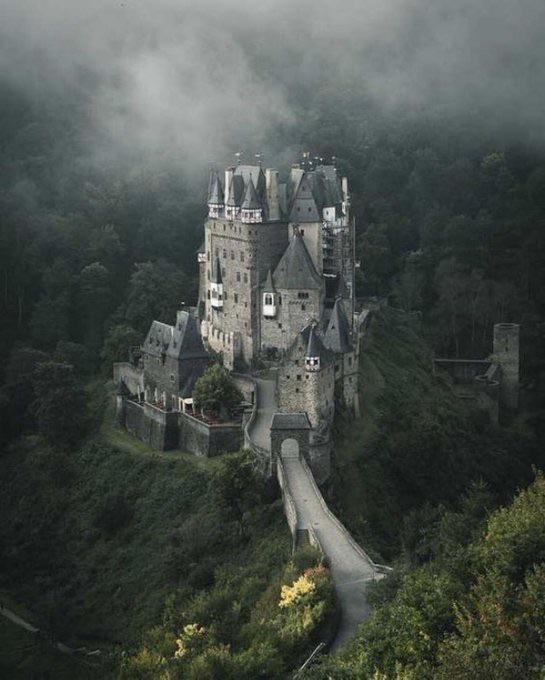
Post image
47.9k Upvotes

1.3k comments sorted by

View all comments

4

u/RandomFlyer643 17h ago

Bet they were members of the Nazi Party at one point

1

u/puffinfish420 17h ago

I mean, like, a huge percentage of the German population were members of the Nazi party at one point. That’s like saying “I bet some of their ancestors were slave owners” when talking about an American family. Somewhere along the family tree you’re bound to be correct, as it was a pretty prevalent practice at one point in time.

1

u/RandomFlyer643 17h ago

Well I didn’t mean it as a “gotcha” against the castle family, but rather as an awareness that I don’t know how you keep control of a whole ass castle in Nazi Germany without being on board with the party in power. I think the Gestapo would have swooped in and took over that castle for a high ranking party member otherwise.

-1

u/ExpensiveAd525 16h ago

That exactly sounds like hollywood university education. "Keep control of a whole ass castle" wow you dont know shit about german law and how it was handled throughout history. Technically the ownership of housing has been untouched if not for racial or politivcal reasons by the nazis and if you wene no party member but german eviction was not on the menu.

2

u/RandomFlyer643 15h ago

I don’t know why you’re being so aggressive in your comment, but I’m just a guy participating in an open forum on the internet about something that intrigued me. By “control a whole ass castle” I was speaking loosely. Do I know German law? Of course I don’t you smart ass, I also don’t know British law, Russian law, Canadian law, or pretty much any other country outside of the US’s law.

But what I do know is that the Nazi regime was famous for stealing and taking whatever they wanted, so I don’t think it’s too out of character for the secret police to round up people who didn’t support the party and strip them of assets. Like they did. Hundreds of times.

0

u/ExpensiveAd525 15h ago

From far away that looks like it. And it is true that the nazis seized estates of nobles known to be in any form of resistance. You could've (as said as an "aryan" german) just keep a low profile and there wasn't much they could or would do. What i mean is they could not just go anywhere and say "thats mine".

1

u/RandomFlyer643 15h ago edited 15h ago

Yeah I may not know German law, but you’re just wrong lmao all it took was a little research to remember what I was previously referencing. “Just keep a low profile” hahaha

“The Nazi regime systematically seized assets from political dissidents, religious objectors, and others deemed enemies of the state. Here are key examples, all of which were GERMAN Citizens

Political opponents

Communist and Social Democratic party officials had homes, bank accounts, and party property confiscated almost immediately after the Reichstag Fire Decree (February 1933), which suspended civil liberties and allowed police to seize “enemy” property without trial.
Trade union assets were seized wholesale in May 1933, when the Nazis dissolved all independent unions and transferred their funds, buildings, and pension reserves to the Nazi-controlled German Labour Front (DAF).

Jehovah’s Witnesses

Refused to swear allegiance to Hitler or serve in the military on religious grounds. Many had businesses shut down, property confiscated, and were sent to concentration camps; assets were often seized upon arrest or deportation.

Confessing Church clergy and religious dissenters

Pastors and church organizations that resisted Nazi control over religious institutions sometimes had church funds frozen or property confiscated, especially later in the regime.

“Enemies of the state” more broadly

The 1933 “Law on the Confiscation of Communist Assets” and later similar laws for Social Democrats allowed the state to seize property without compensation from anyone deemed politically hostile.
• People sent to concentration camps for political reasons routinely had their possessions confiscated as part of the “protective custody” (Schutzhaft) process — their property was often auctioned or sold, with proceeds going to the state.

Forced institutionalization

• People deemed mentally ill, disabled, or “asocial” (a broad Nazi category that included the homeless, Roma, and others who didn’t conform) frequently had assets and property seized when they were institutionalized or deported.

General mechanism

• The Gestapo had broad authority to declare someone’s property “forfeit to the state” for political unreliability, often with minimal legal process. Courts (especially the People’s Court after 1934) could order confiscation as part of sentencing for treason or “undermining military morale.”

1

u/ExpensiveAd525 14h ago

Do you read what i write? That was an integral part of my arguments. If you were in any shape or form of resistance or racially or socially outcast they would mercilessly come for your posessions - that was their central business model day 1 ff. What i explicitly said was if you were not and if you were a noble in germany in thr 30s you WERE not bc you were white and christian and the local hunting boss and you needed to be a nazi "NOT" youve just coulda kept low profile and you were safe. Works for the rest of the non noble population almost as good.